· Platto
What I took out of Platto
In August I took things out of Platto that already worked: the 3D automation, a demo that wasn't quite real and AI features nobody had asked for.
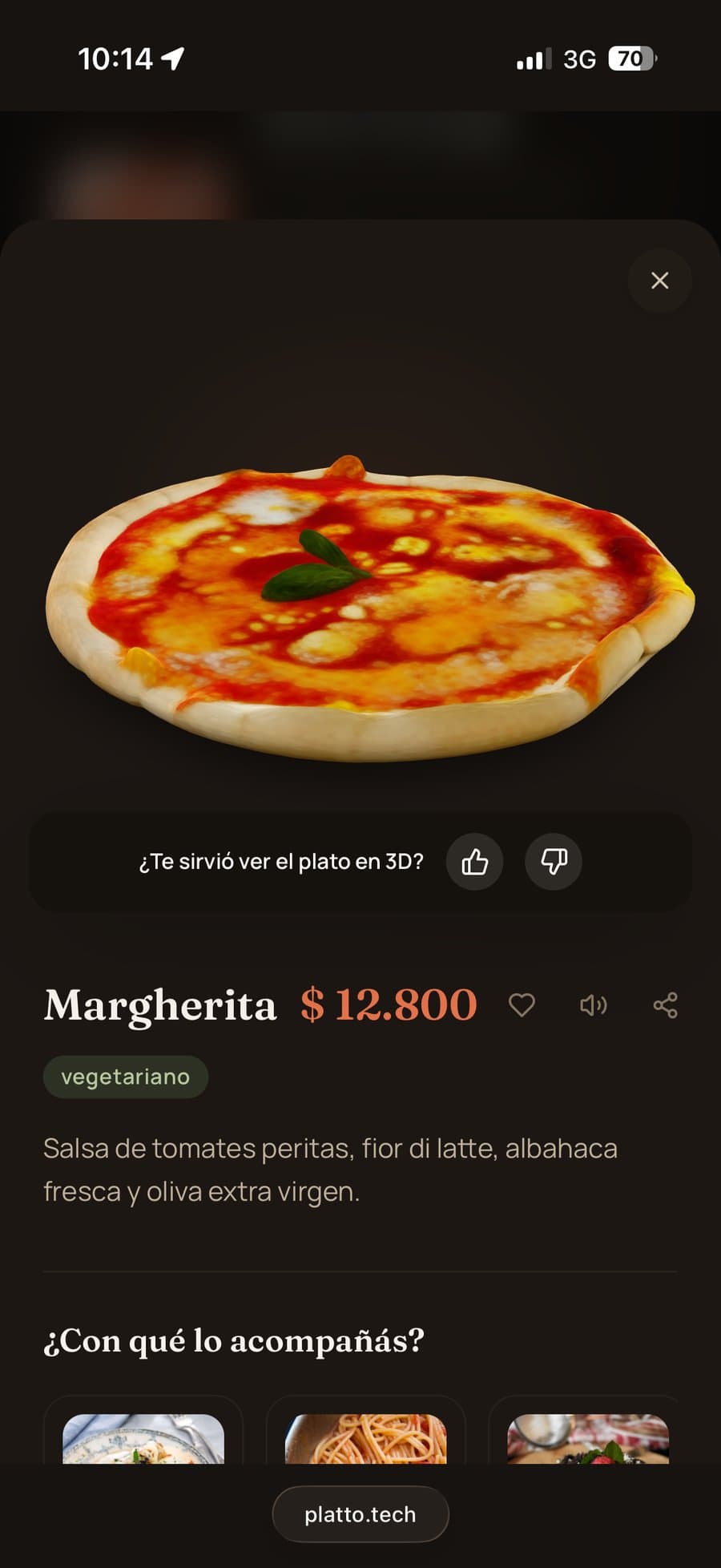
Platto is a digital menu where every dish can be seen in 3D and on your table. In the first weeks I added all kinds of things. Then I did the opposite: I took things out. None of them were broken. I removed them because they weren't true, or because nobody had asked for them.
1. The 3D automation
Getting a dish's 3D model was the hardest part: I tried six different approaches. In the end I had an automation that worked, with a panel where the restaurant owner could take the photos and get their dish back in 3D.
But the results weren't accurate enough. On a menu where people order based on what they see, showing a dish that doesn't look like the real one is worse than showing nothing. So I removed that panel from the owner's view and built a way to upload models by hand from the admin panel, while I validate the product. I didn't delete the automation: it's switched off, in case I pick it up again.
2. A demo that wasn't quite real
Platto's landing page said "Spin to see it in 3D" over a photo with animations faking it. It wasn't true. I replaced it with a real 3D model, the same one a customer sees on the menu. For the same reason I removed a feature that didn't exist yet from one of the pricing plans.
3. The AI nobody asked for
Platto translated the menu with AI and could read it from a photo to load it automatically. Nobody had asked me for that. I took it out: translations are written by hand again, but now on a single screen with the original next to them, and importing still works with a spreadsheet. Allergen suggestions stayed, because they aren't AI: they match words against a list and work even without internet.
What I take from it
- Something working isn't reason enough to keep it. The question is whether it helps whoever uses it.
- If the page says something, it has to be true. People can tell when a demo is staged, and trust doesn't come back.
- Every feature nobody asked for is one more thing to maintain and explain, and one more thing that can break.
All notes
All notes →